Nature has been experimenting with extraordinary abilities for millions of years, and some animals have evolved talents that would make comic-book superheroes jealous. From regenerating lost body parts to producing electricity, these creatures prove that truth can be much stranger than fiction.
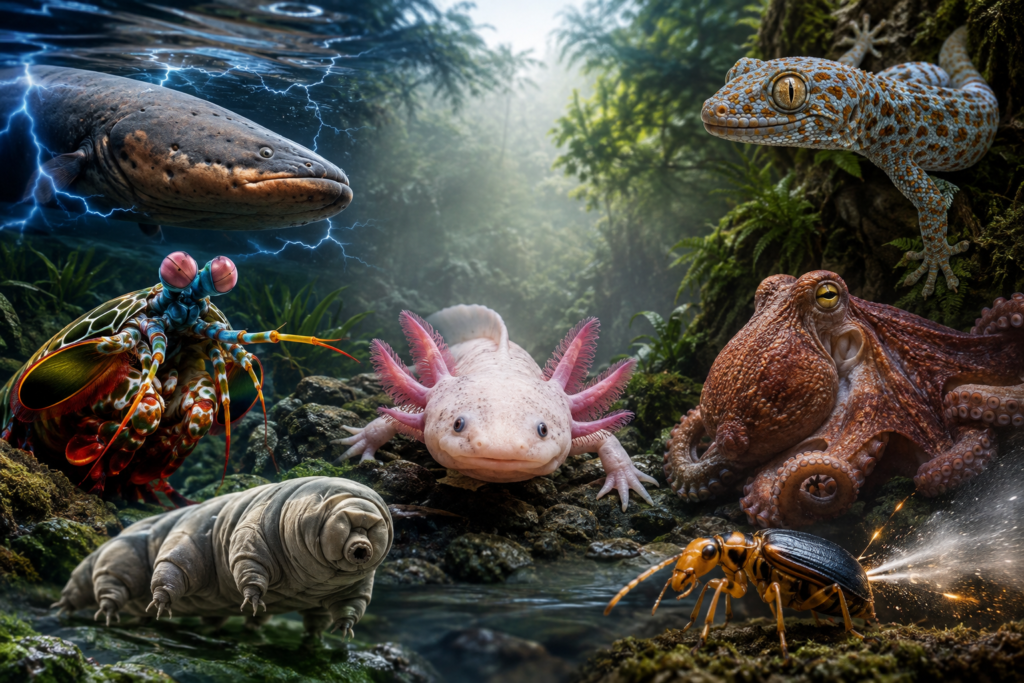
1. Axolotls can regenerate body parts.
Axolotls are famous for their remarkable regenerative abilities. They can regrow lost limbs and repair certain damaged tissues without the kind of scarring humans normally experience. Scientists study them in hopes of better understanding how regeneration works.
2. Electric eels generate powerful electrical discharges.
Despite their name, electric eels aren’t true eels. They’re a type of knifefish, and specialized cells in their bodies allow them to produce electrical discharges used for hunting, defense, and sensing their surroundings.
3. Geckos can climb incredibly smooth surfaces.
A gecko doesn’t need glue to walk across a wall or ceiling. Millions of microscopic structures on its toes interact with surfaces at a molecular level, creating enough adhesion to support the animal’s weight.
4. Mantis shrimp have extraordinary eyes.
Mantis shrimp possess one of the most complicated visual systems known in the animal kingdom. Their eyes can detect types of light humans cannot see, including ultraviolet and polarized light.
5. Tardigrades can survive astonishing extremes.
These microscopic animals, nicknamed water bears, can enter a dormant state called cryptobiosis. In that state, some tardigrades can endure conditions that would quickly kill most animals, including extreme dehydration, intense radiation, and exposure to the vacuum of space.
6. Bombardier beetles fire a chemical defense.
When threatened, a bombardier beetle mixes chemicals inside its body and ejects a hot, irritating spray toward an attacker. It’s essentially carrying a tiny chemical defense system everywhere it goes.
7. Octopuses are masters of disguise.
An octopus can rapidly change its appearance using specialized structures in its skin. Some species alter not only their color but also patterns and apparent texture, helping them disappear against rocks, coral, and sand.
8. Archerfish shoot prey out of the air.
Archerfish hunt insects above the water by firing carefully aimed jets of water from their mouths. Even more impressively, they compensate for the way light bends when passing between air and water.
9. Wood frogs can survive being partially frozen.
Certain wood frogs endure winter by allowing substantial portions of their bodies to freeze. Their metabolism slows dramatically, and natural compounds help protect their cells until temperatures rise and the frogs thaw.
10. Dolphins use biological sonar.
Dolphins produce sounds and interpret the returning echoes to investigate their surroundings. This ability, called echolocation, lets them locate objects and prey even when visibility is poor.
Nature’s Real Superheroes
None of these animals needs a cape. Their extraordinary abilities evolved because they helped their ancestors survive, hunt, escape predators, or reproduce. And scientists are still discovering just how sophisticated some of these adaptations really are.
The next time a superhero movie seems far-fetched, remember the axolotl growing a new limb, the beetle firing boiling chemicals, and the microscopic tardigrade surviving conditions humans can barely reproduce safely in a laboratory. Nature got there first.